

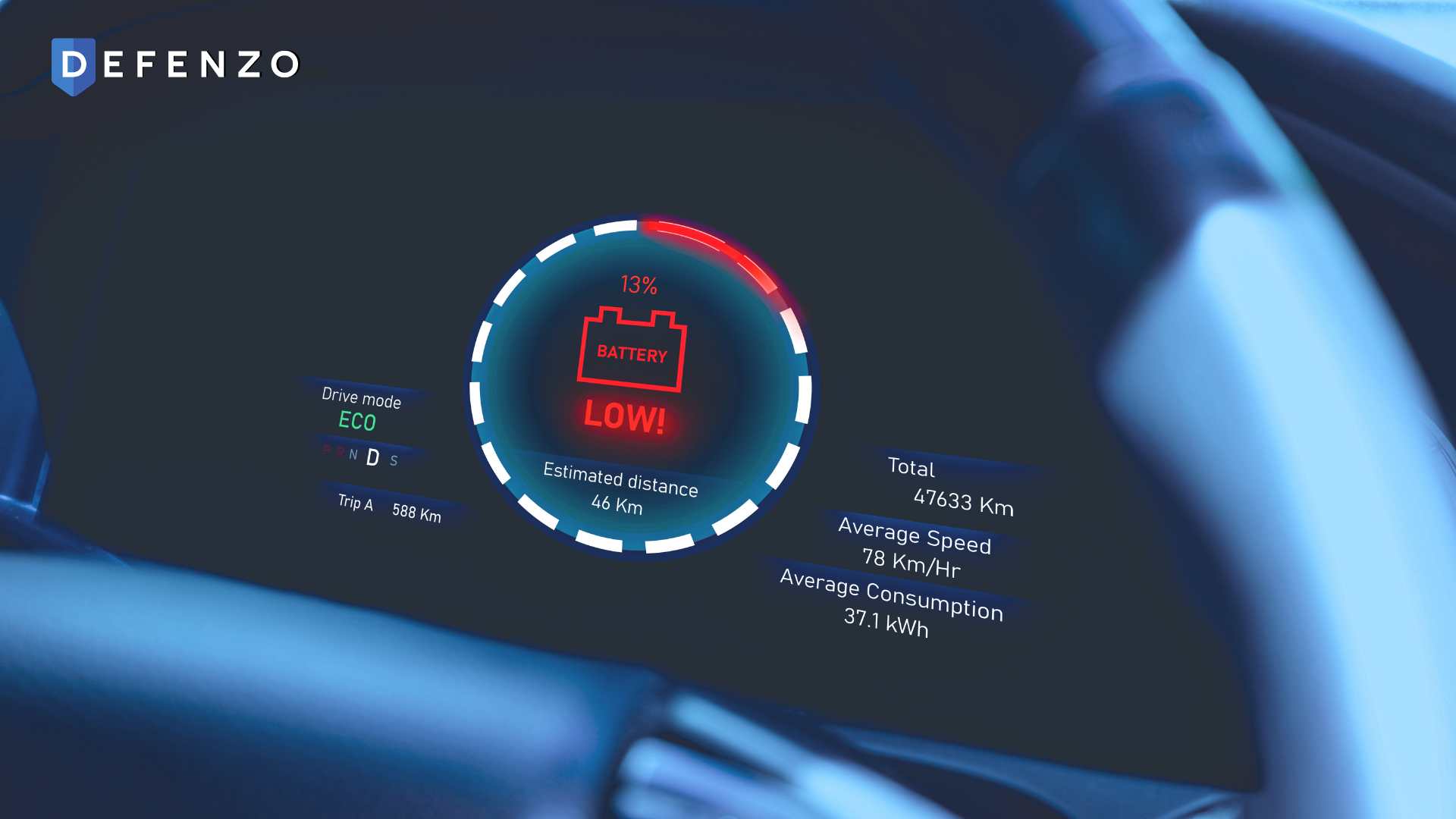
How to take care of an electric car battery – this is a question every conscious driver asks themselves if they want to enjoy the maximum range and longevity of their vehicle for many years. The traction battery is undoubtedly the most expensive and important component of any BEV (Battery Electric Vehicle). Although modern lithium-ion cells are designed to last for hundreds of thousands of kilometers, their actual degradation largely depends on the user’s daily habits. Understanding the chemical processes occurring inside the cells and skillfully managing charging sessions is the key to avoiding costly repairs and maintaining a high residual value of the car for potential resale.
1. Avoid extreme charge levels (The 20-80% rule)
The most important rule regarding how to take care of an electric car battery is to keep the State of Charge (SoC) in the optimal range, i.e., between 20% and 80%. Lithium-ion cells are most “stressed” in two cases: when they are almost completely discharged and when they are charged to the brim. Storing a car with a battery charged to 100% for a long time causes an increase in internal voltage, which accelerates chemical degradation. Conversely, dropping below 10% risks so-called deep discharge, which in extreme cases can permanently damage the modules. If you plan on daily city driving, limit the maximum charge level in the car’s settings to 80% – your battery will reward you with a much smaller drop in SOH (State of Health) capacity.
2. Limit the use of fast DC chargers
Fast direct current (DC) chargers are a lifesaver on the road, but overusing them is one of the battery’s biggest enemies. When charging at 100 kW, 150 kW, or even 350 kW, a huge amount of heat is generated inside the cells. High temperature is the main factor accelerating electrolyte aging. Although advanced liquid cooling systems in modern electric cars do their best, you cannot cheat physics. If possible, charge your car with alternating current (AC) from a home wallbox or a public charging station. Slower charging (even 11 kW) is much gentler on the chemical structure of the cells and allows for their even balancing.
3. Manage temperature – park in the shade or a garage
Extreme temperatures are another issue you must remember when wondering how to take care of an electric car battery. Both heat above 30 degrees and frost below zero negatively affect the battery chemistry. On hot days, try to park in the shade so that the cooling systems do not have to work at full capacity, consuming energy in the process. In winter, garaging the car allows you to keep the pack temperature at a safe level, which translates into better recuperation efficiency and higher charging power right after starting. It is also worth using the battery preconditioning function before a planned trip while the car is still plugged into the grid.
4. Smooth driving and recuperation
Driving style has a direct impact not only on range but also on battery condition. Aggressive acceleration and sudden braking generate large current spikes, which cause sudden temperature jumps inside the cell pack. Using the recuperation (energy recovery) system smoothly is much healthier for the BMS. Modern cars offer “One Pedal Driving” modes that allow for intuitive energy flow management. However, remember that at a very high state of charge (above 90%), recuperation is limited because the battery has nowhere to accept the recovered energy – this is another argument for sticking to the 80% range.
5. Regular charging and cell balancing
It is a mistake to wait to charge until the battery drops almost to zero. Lithium-ion cells prefer short, regular top-up cycles. Once in a while (e.g., once a month), however, it is worth charging the car to 100% (preferably with AC) and leaving it plugged in for a few extra hours. Why? Because only at full charge can the BMS (Battery Management System) perform full cell balancing, i.e., equalizing the voltages between individual cells. This is a key process for maintaining real capacity and avoiding errors in range estimation by the onboard computer.
6. Storing the car during a long break
If you plan not to use your electric car for several weeks, never leave it with the battery fully charged or completely discharged. The ideal level for long-term parking is about 50-60%. In this state, the voltage inside the cells is most stable, which minimizes chemical stress. If the car is in a garage, it is worth checking the charge level from time to time to ensure that the onboard systems (the so-called 12V electronics) are not draining the main traction battery.
7. Planning routes with cell health in mind
Modern navigation systems in electric cars can automatically heat the battery when the destination is set to a fast DC charger. This is an extremely important feature. Charging a “cold” battery with high power is very harmful to it. Thanks to proper thermal preparation, current can flow at the maximum possible power from the very beginning of the session, which shortens the stop time and protects the cells from micro-damage.
In summary, education is key
Knowledge of how to take care of an electric car battery is the most valuable tool for every EV driver. By following the above rules – limiting fast charging, maintaining an optimal SoC range, and avoiding extreme temperatures – you will make battery degradation an almost imperceptible process. Remember that modern energy management systems are very intelligent, but your daily decisions have the final impact on whether your car will still offer a range close to the factory one after several years of operation. Conscious operation is not only about caring for the environment but, above all, for your wallet and travel comfort in the world of the future. A conscious approach to charging and regular monitoring of SOH parameters using simple diagnostic tools will allow you to enjoy trouble-free driving and make electromobility synonymous with reliability and modern comfort that will not fail you even on the longest route for many years of intensive vehicle use.