

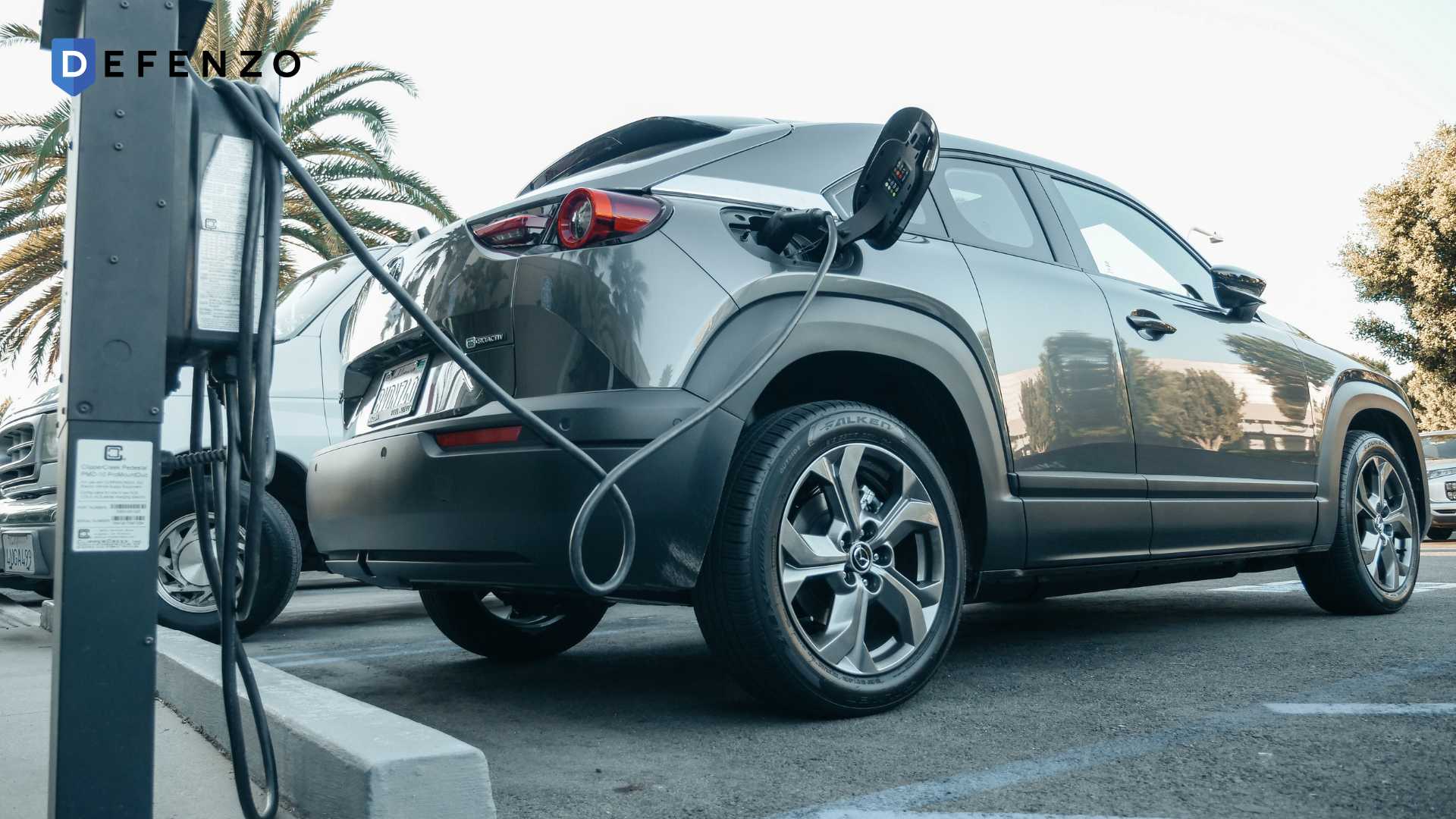
Anyone who has ever taken an electric car out of town has had to face the question: RFID card, app, or Plug & Charge – what is the most convenient way to charge your car on the road? At the beginning of your adventure with modern electromobility, it may seem that there are far too many options for authorizing a session, which creates unnecessary stress for beginner drivers. In reality, however, each of these methods has its own strictly defined place in the travel ecosystem and meets different user needs. Although digital technology is moving forward at an incredible pace, older solutions are still holding strong because one thing counts above all else on a long journey: reliability. The session must start the first time, regardless of whether we have phone coverage or the operator’s server is undergoing maintenance.
RFID card as the foundation of travel reliability
Many experienced drivers who have driven thousands of kilometers in BEV vehicles still believe that a physical RFID card is the safest choice for long highway trips. Its main advantage over modern solutions lies in its complete simplicity and resistance to external factors. To start the charger, simply touch the plastic tag to the reader on the station’s housing. At this point, an instantaneous data exchange occurs, and the system almost immediately knows who it is dealing with and which payment profile to assign to the session.
Crucially, such a card does not require an active internet connection on your smartphone or a charged battery in your phone. This can be a lifesaver on routes leading through less connected areas, in deep mountain valleys, or in underground parking lots where GPS and LTE signals often fade. By using the services of proven mobility providers, known as MSPs, we can use one physical card to activate thousands of chargers from different brands as part of international roaming. This avoids the need to install dozens of apps and set up separate accounts with every local operator we pass on the way to our destination.
Mobile app and full control over session parameters
On the other hand, we have mobile apps that offer the user something a simple plastic tag cannot provide: full, digital insight into charging parameters in real time. It is thanks to them that the driver can monitor the energy replenishment process on an ongoing basis while sitting comfortably in a nearby cafe or resting at a service area. On the phone, we see exactly the current SoC, i.e., the percentage state of charge of the traction battery, and precise information about the power in kW at which current is flowing to the lithium-ion cells. This knowledge is crucial because it allows us to assess whether the charging curve has already dropped and whether it is worth continuing the stop.
Mobile apps also act as advanced navigators. They allow you to check in real time whether a given CCS2 or CHAdeMO connector is free and functional before you even decide to exit the main route. Modern software can filter stations based on available power, price per kilowatt-hour, and even the availability of amenities in the area. Although they require a stable network connection, they are an indispensable tool for planning travel logistics, allowing you to avoid queues at charging stations, which is crucial for maintaining travel fluidity during the peak holiday season.
Plug & Charge: the highest standard of convenience and the future of the industry
However, the real revolution that finally ends the discussion about the most convenient way to charge a car on the road is Plug & Charge technology based on the advanced international ISO 15118 standard. In this model, the energy replenishment process is closest to the ideal that pioneers of electromobility dreamed of. We don’t need a card, a phone, or even a wallet here. All the magic happens the moment you plug the connector into the car’s charging port. The vehicle automatically establishes an encrypted connection with the station, exchanges security certificates, and authorizes the session in a few seconds.
The car automatically recognizes the payment profile assigned to the VIN and begins delivering energy without any additional intervention from the driver. This solution completely eliminates problems with coverage, lost cards, or app errors. It is currently the quintessence of convenience, offered mainly in premium models and in the most modern high-power charging networks, such as Ionity. Plug & Charge makes operating an electric car simpler than refueling with traditional fuel, as we even skip the payment process at the checkout or terminal.
Summary and choosing the best strategy for the road
Ultimately, which authorization method you choose depends on the technical capabilities of your vehicle and the infrastructure available on a given stretch of road. If your car supports the Plug & Charge system, it is unequivocally the best way to travel without any barriers. Nevertheless, experience teaches that in the world of technology, it is always worth having a backup plan.
To ensure your trip goes smoothly, it is worth sticking to a few simple rules:
- Check before you leave whether your car and EV charger operator support the Plug & Charge standard to simplify stops as much as possible.
- Install an app that aggregates charging points (e.g., from an MSP provider) to monitor the availability of CCS2 connectors on the route in real time.
- Always keep at least one physical RFID card in the glove compartment that will work in places with poor cellular network coverage.
- Plan charging sessions so that you finish them when the charging curve drops sharply, which usually happens after exceeding 80% SoC.
The world of charging is becoming more user-friendly every year, and the choice between a card, an app, and a maintenance-free system is just a matter of personal preference. Regardless of the path chosen, the goal remains the same: reaching your destination efficiently, quickly, and safely, while enjoying the comfort that comes with driving a modern electric car.