

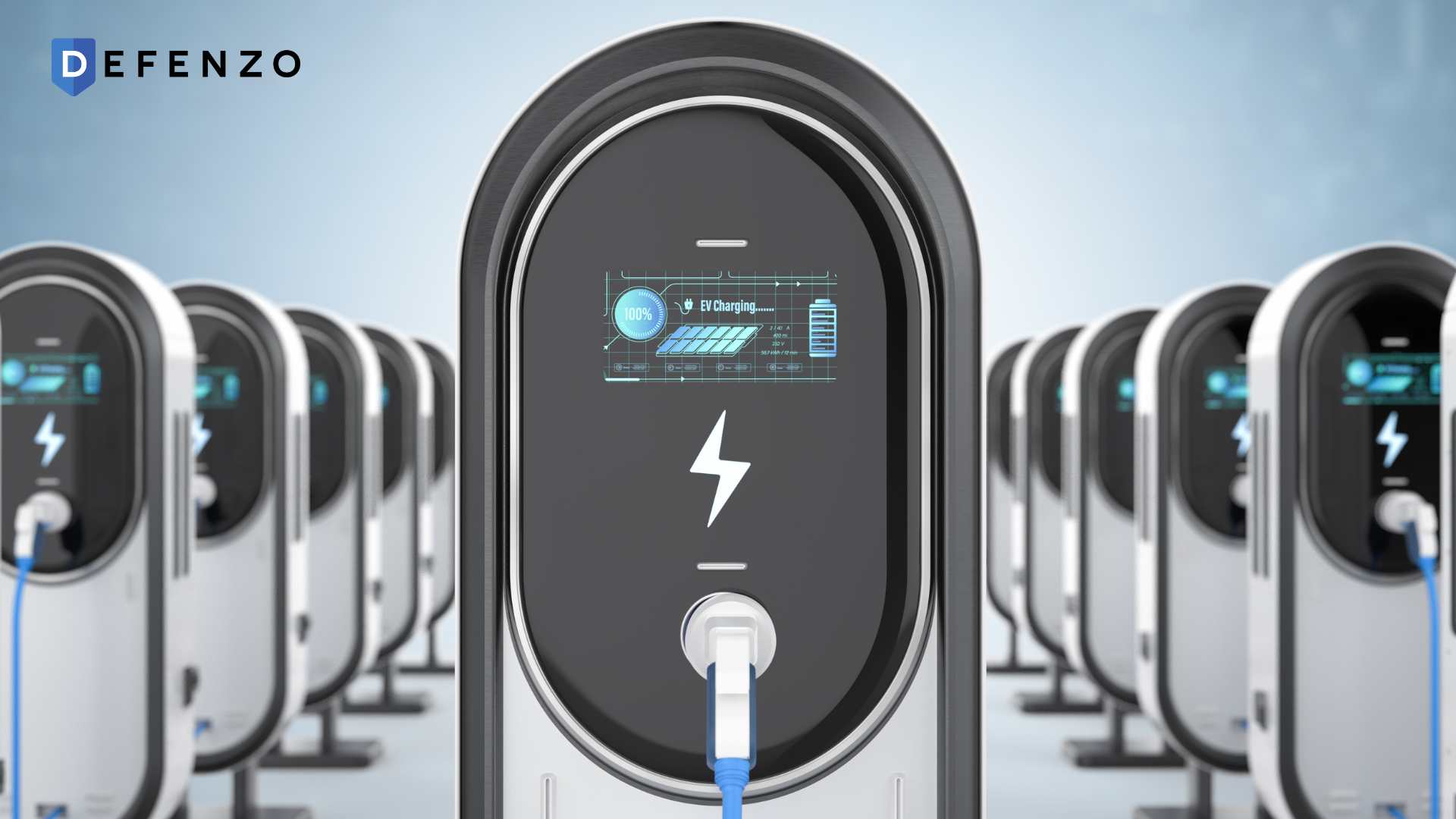
What power connection is needed for a car charger to safely and quickly charge a vehicle in a home garage? This is one of the first questions a new EV owner faces in 2026, as the market offering of wallboxes becomes increasingly advanced. Choosing the right contracted power is crucial not only for the charging time of the battery cells but, above all, for the stability of the electrical installation throughout the building and the protection of expensive household appliances. In this guide, we will explain in detail how to calculate your actual power demand yourself to effectively avoid the risk of overloading your home network. You will learn what power connection for a car charger will be best in your specific case, taking into account both current limits and the future expansion of your private energy ecosystem with photovoltaics or energy storage. We will also present the most common mistakes made during the connection planning stage, which can generate unnecessary costs for upgrading the switchboard in the future.
Standard demand: 11kW charger vs. connection power
Most modern electric cars use on-board three-phase chargers with a power of 11 kW. To fully utilize the potential of such a device, you need to know what power connection for a car charger is required by your utility company. The minimum power for a house with a wallbox should be at least 17-20 kW. Why? Because in addition to the car, your home is simultaneously powering a heat pump, an induction hob, or an oven. Understanding what power connection for a car charger will allow for the parallel operation of all appliances is the basis for avoiding annoying power failures.
Dynamic Load Balancing (DLB) instead of expensive connections
If your connection is currently too weak (e.g., the standard 12.5 kW), plugging in a full-power wallbox will cause the pre-meter fuses to trip almost immediately. When analyzing what power connection for a car charger will be sufficient, it is worth considering the simultaneity factor. In 2026, Dynamic Load Balancing (DLB) systems are becoming the standard. This intelligent technology automatically limits the car’s charging power when you turn on other energy-intensive devices. Thanks to this, the answer to the question of what power connection for a car charger is needed becomes much more flexible for your wallet.
How to legally increase the connection power with the Distribution System Operator (DSO)?
If an audit shows that your current limit is insufficient, you must submit an application to the Distribution System Operator. Knowing what power connection for a car charger will provide you with full comfort, you can apply for an increase in the limit, for example, to 25 kW. In 2026, this process is carried out mainly through online customer portals, and the cost depends on the number of additional kilowatts. Precisely determining what power connection for a car charger you ultimately need will allow you to avoid errors in documentation and additional visits from a certified electrician (SEP).
Choosing the cable: Why does the cross-section matter?
Contracted power is not everything. What happens between the switchboard and the wallbox is equally important. When planning what power connection for a car charger will be used, you must ensure the appropriate copper cable cross-section (recommended min. 5×6 mm² for 11 kW). Using wires that are too thin over long cable runs causes voltage drops and overheating of contacts. Proper infrastructure preparation ensures that the power connection for a car charger you choose actually reaches your vehicle’s battery.
Safe home charging
In summary, what power connection for a car charger will be best depends on your energy balance and home equipment. For complete freedom, it is worth aiming for values above 22 kW, which allows for stress-free use of Smart Home technology and fast EV charging. Remember that the final decision on what power connection for a car charger is chosen should be confirmed by a professional wallbox installation. By investing in an appropriate power reserve and an energy management system, you gain the certainty that your home network will work efficiently, and daily car operation will become a maintenance-free and safe part of your day for many years. An intelligent approach to the issue of power connection and the choice of proven installation components is the simplest way to maximize the benefits of owning a modern electric vehicle in the realities of 2026.